Advanced Lens Options for Better Vision
Modern lens technology helps correct vision problems and restore clear sight during various eye procedures.
Overview
The intraocular lens (IOL) you choose shapes your day-to-day vision after cataract surgery, refractive lens exchange or ICL surgery. We offer four categories — monofocal, multifocal, toric and EDOF (extended depth of focus) — each suited to different visual needs, from a single focal distance to astigmatism correction to a broader range of clear focus.
Key Highlights
- Monofocal: clear single-distance (typically far) vision
- Multifocal: clear vision at near, intermediate and far distances
- Toric: corrects astigmatism alongside your base vision needs
- EDOF: an extended focus range, useful for driving and computer work
- Overall goal: better clarity, reduced glare, and less dependence on glasses
Why Are Eye Lenses Used in Surgery?
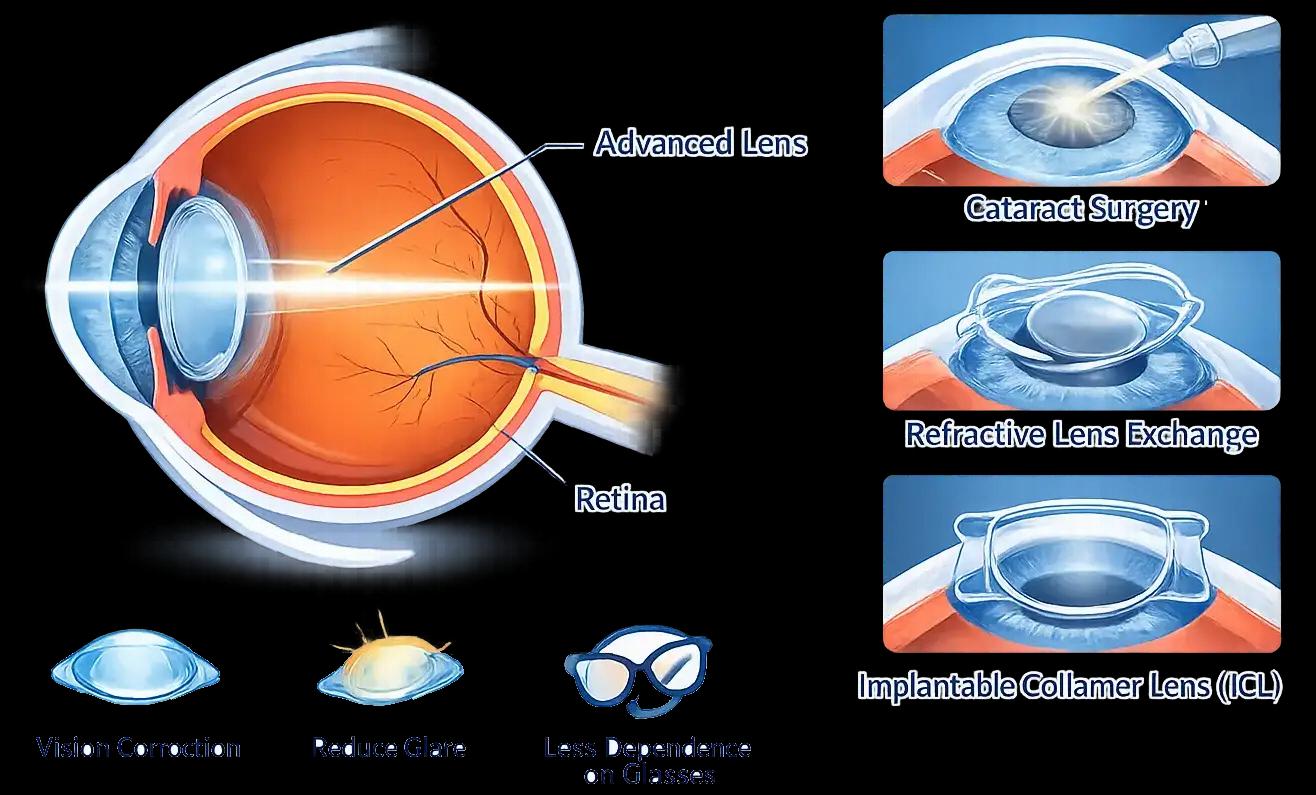
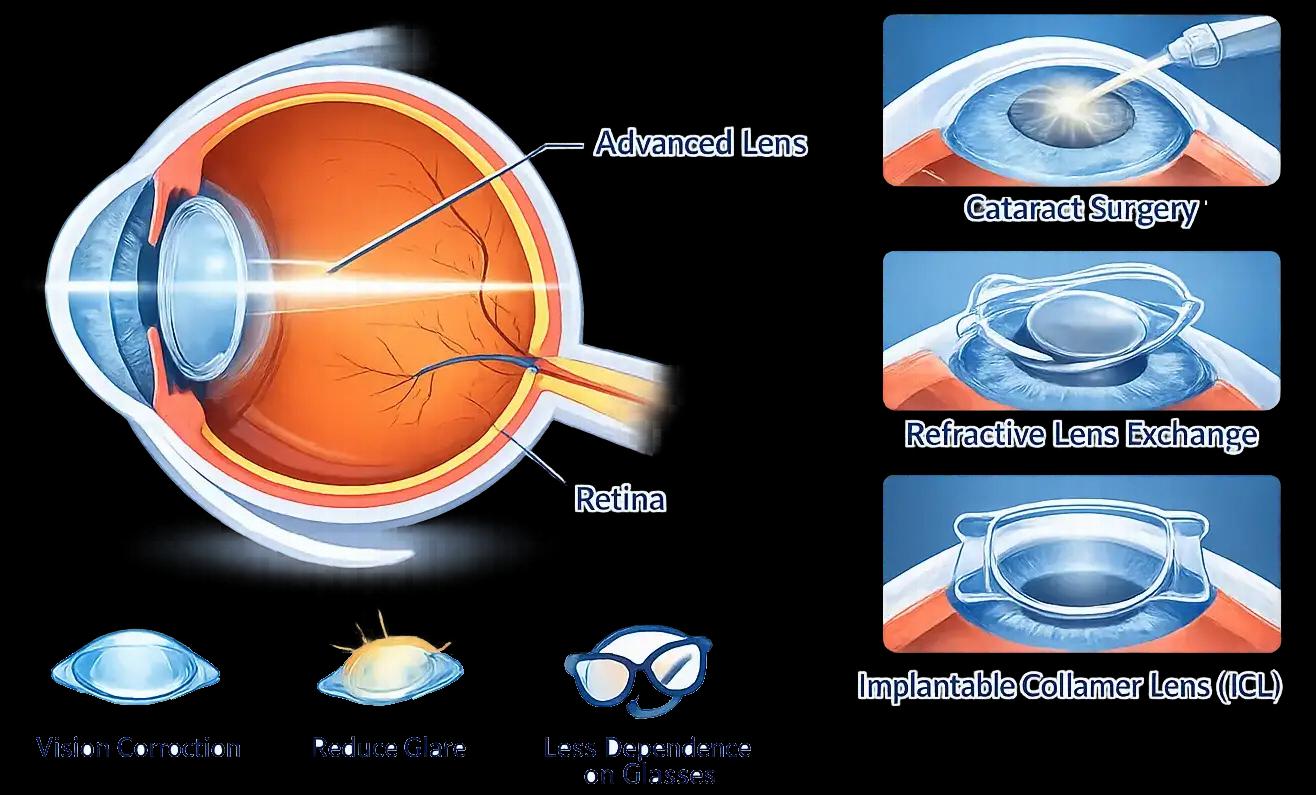
In many modern eye treatments, special medical lenses are used to improve or restore vision. These lenses are designed to replace or support the natural lens of the eye, helping patients see more clearly and comfortably.
Advanced lenses are commonly used in procedures such as Cataract Surgery, Refractive Lens Exchange, and Implantable Collamer Lens Surgery.
These lenses are made using highly advanced materials and optical technology to provide better visual clarity, reduce glare, and minimize dependence on glasses.
Types of Lenses We Use
We provide several types of advanced lenses designed to address different vision needs and eye conditions.
Monofocal Lens
Provides clear vision at one distance, usually for far vision. Often used in cataract and lens replacement surgeries.
Multifocal Lens
Designed to provide clear vision at near, intermediate, and far distances, helping reduce dependency on glasses.
Toric Lens
Corrects astigmatism along with other vision problems, providing sharper and more stable vision.
EDOF Lens (Extended Depth of Focus)
Provides an extended range of focus, especially useful for distance and intermediate vision like driving and computer work.
Frequently Asked Questions
Quick answers to common questions about eye care, appointments, and services.
You should visit an eye doctor if you experience blurry vision, eye pain, redness, headaches, frequent eye strain, or for routine eye check-ups to maintain healthy vision.
You should visit an eye doctor if you experience blurry vision, eye pain, redness, headaches, frequent eye strain, or for routine eye check-ups to maintain healthy vision.
You should visit an eye doctor if you experience blurry vision, eye pain, redness, headaches, frequent eye strain, or for routine eye check-ups to maintain healthy vision.
You should visit an eye doctor if you experience blurry vision, eye pain, redness, headaches, frequent eye strain, or for routine eye check-ups to maintain healthy vision.
You should visit an eye doctor if you experience blurry vision, eye pain, redness, headaches, frequent eye strain, or for routine eye check-ups to maintain healthy vision.
You should visit an eye doctor if you experience blurry vision, eye pain, redness, headaches, frequent eye strain, or for routine eye check-ups to maintain healthy vision.
Ready to take the next step with Lens Options (IOLs)?
Book a consultation and our specialists will guide you to the right treatment.