Keratoconus Treatment & Cornea Care — Strengthen Your Cornea. Protect Your Vision.
Advanced diagnosis and treatment options to stop progression and improve vision in keratoconus.
Overview
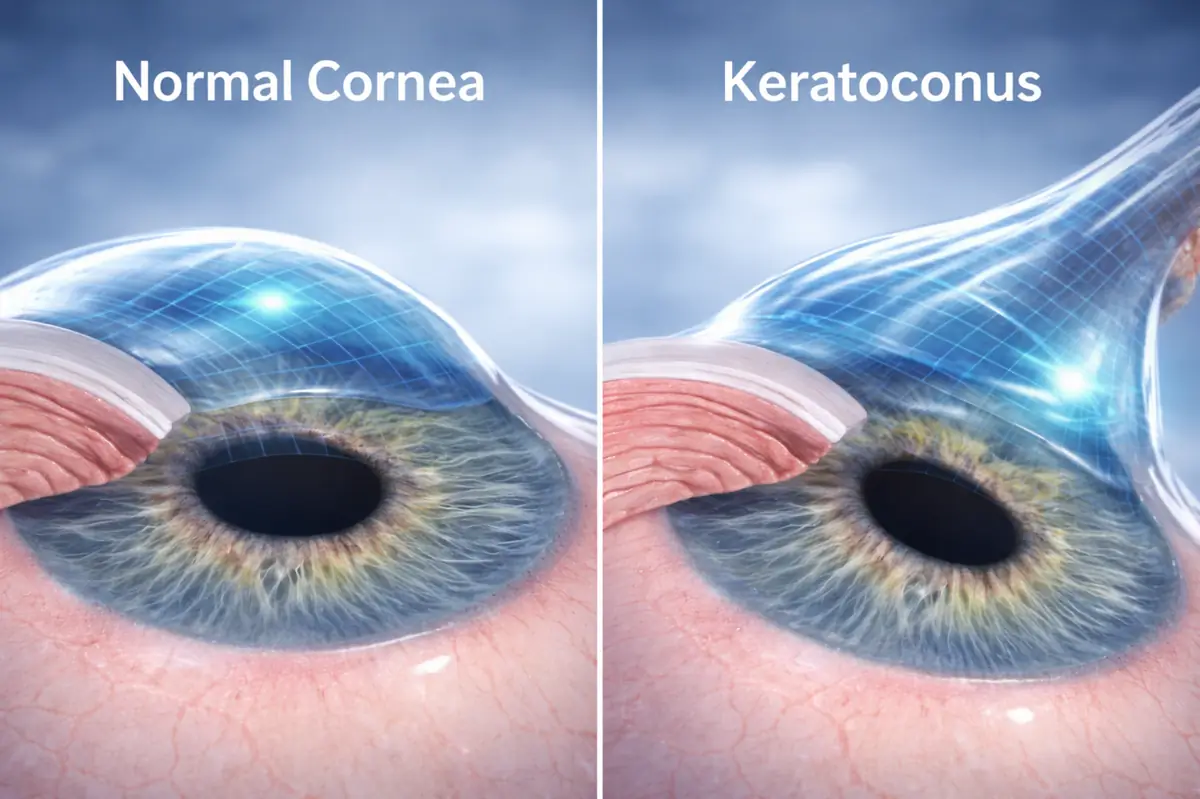
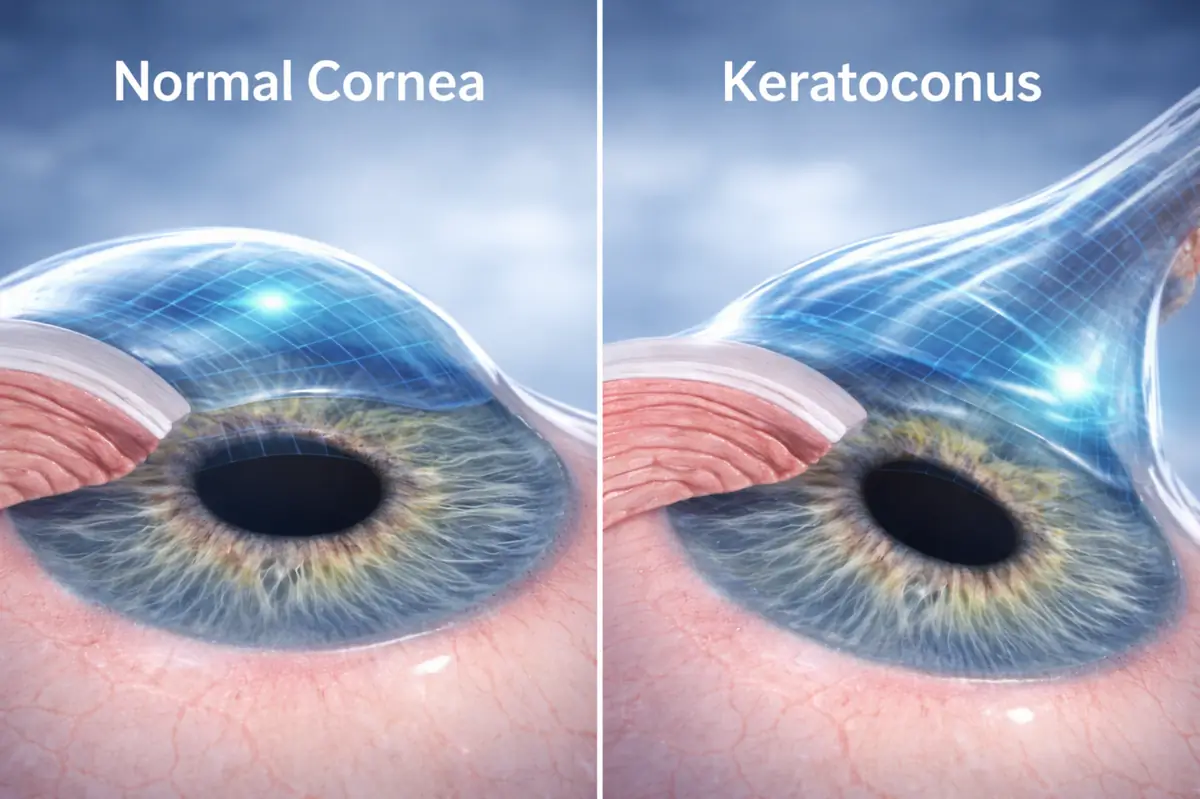
Keratoconus is a condition where the cornea progressively thins and bulges into a cone shape, causing blurred vision, glare and halos — usually starting in the teens or early adulthood. Corneal Collagen Cross-Linking (C3R/CXL) is our gold-standard treatment to halt progression, with further options such as speciality contact lenses, INTACS rings, topography-guided PRK, ICL or corneal transplant depending on severity.
Key Highlights
- Diagnoses and treats keratoconus (progressive corneal thinning and cone-shaping)
- Corneal Collagen Cross-Linking (C3R/CXL), including a faster-recovery accelerated variant
- RGP/Rose-K/scleral-hybrid contact lenses and INTACS ring implants for milder cases
- Topography-guided PRK or ICL for residual refractive error
- Corneal transplant available for severe or scarred corneas
- Diagnosis via corneal topography (Pentacam/Orbscan), pachymetry and slit-lamp exam
What is Keratoconus?
Keratoconus is a non-inflammatory condition in which the normally round cornea becomes thin and irregular, forming a cone-like shape. This causes light entering the eye to scatter, leading to blurred vision, glare, halos, and irregular astigmatism.
The condition usually starts in the teenage years or early adulthood and may gradually progress over time. In most cases, both eyes are affected, although one eye may be more severe than the other.
- Frequent eye rubbing
- Genetic factors / family history
- Allergies or chronic eye irritation
- Weak corneal collagen structure
- Long-term contact lens use
What Causes Keratoconus?
Advanced Treatments for Keratoconus
Treatment focuses on stopping progression and improving vision.
Corneal Collagen Cross-Linking (C3R / CXL)
This is the gold-standard treatment to stop keratoconus progression. It strengthens the cornea by increasing collagen bonding, making it more stable and preventing further bulging.
Accelerated CXL
A faster version of cross-linking that reduces treatment time while delivering the same results with quicker recovery.
Specialized Contact Lenses
RGP (Rigid Gas Permeable) lenses, Rose-K lenses, Scleral / Hybrid lenses These help improve vision by creating a smooth optical surface over the irregular cornea.
INTACS (Corneal Ring Implants)
Small ring segments inserted into the cornea to improve shape and reduce irregularity. Minimally invasive, Can improve vision quality, Reversible procedure
Advanced Laser (Topo-guided ASA / PRK)
Used in selected cases to improve corneal shape and vision, often combined with cross-linking.
ICL (Implantable Lens)
Helps correct residual refractive error after stabilizing keratoconus.
Corneal Transplant (Advanced Cases)
In severe cases with scarring or extreme thinning, corneal transplant may be required to restore vision.
Accurate Diagnosis with Advanced Technology
Early detection helps prevent vision loss.
Corneal Topography (Pentacam / Orbscan)
Maps corneal shape
Pachymetry
Measures corneal thickness
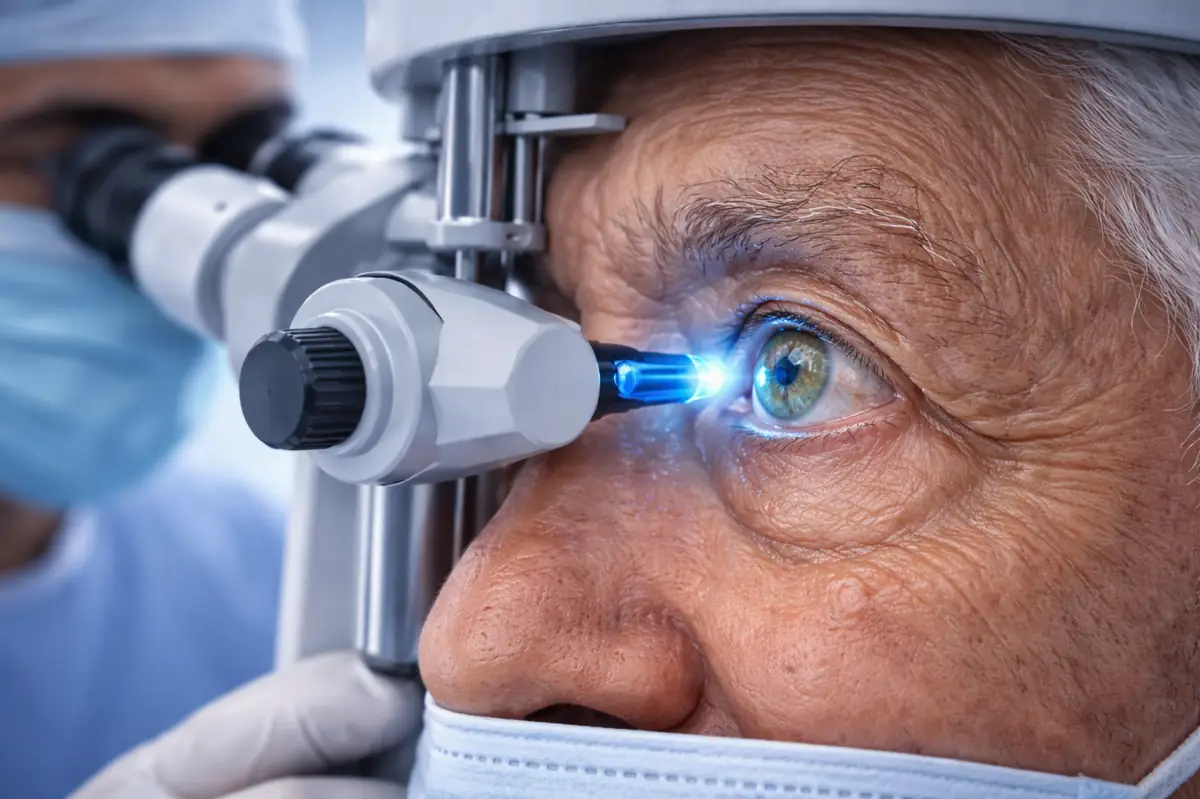
Slit Lamp Examination
Detailed eye evaluation
Visual Acuity & Refraction Tests
Why Choose Our Cornea Services?
- Advanced cornea diagnostics & topography systems
- Expertise in CXL, INTACS & keratoconus management
- Customized treatment plans for every patient
- Experience in handling mild to advanced cases
- Focus on early detection and long-term stability
Ready to take the next step with Cornea & Keratoconus?
Book a consultation and our specialists will guide you to the right treatment.